An interview with MacDonald, introducing herself and her work as she joins Mt.A faculty
Mary Jo MacDonald is an assistant professor of political theory at Mt.A and began teaching in September 2026. MacDonald teaches Modern Political Thought and Women in the History of Political Thought in the fall semester and will teach Foundations of Politics and Democratic Thought in the winter semester.
In an interview with The Argosy on Aug. 4, MacDonald said she was drawn to Mt.A because she is from the East Coast and grew up in “a small town that felt the size of Sackville in Nova Scotia.” MacDonald said she loves “the kind of liberal arts education you can have in that environment.” Focusing on Mt.A’s small class sizes, MacDonald noted, “it’s really nice to be able to get to interact with the students one-on-one.”
MacDonald said she, alongside most instructors, wants to facilitate the growth of “critical thinking and research abilities so that students can go out and ask questions.” Particularly in her classes, she hopes students “come away with a feeling of the historical kind of legacies of the debates that we’re having in politics today, that these aren’t new; if we’re talking about men and women being equal, that’s not a new idea today.”
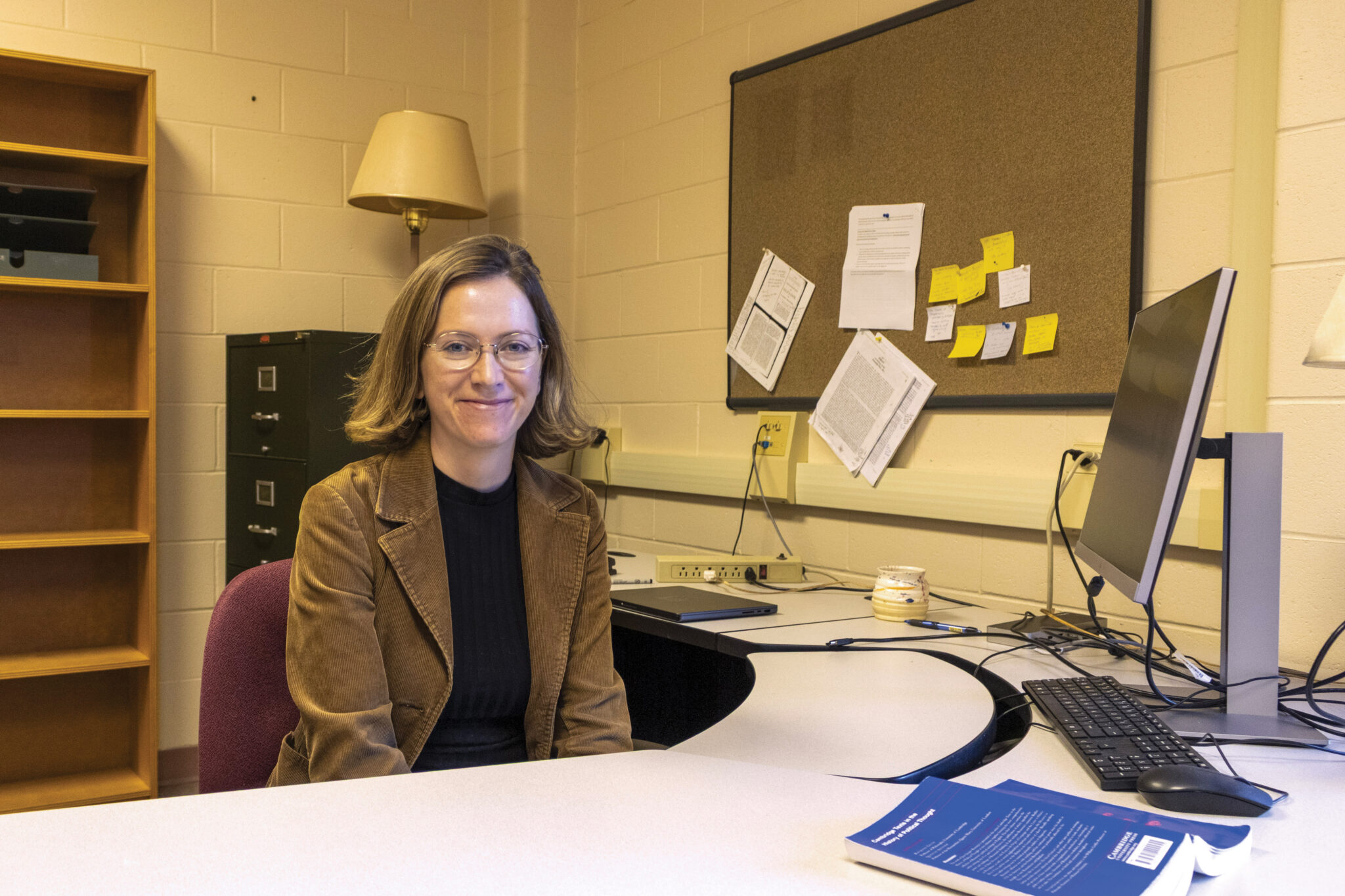
MacDonald described political theory as a sub-discipline of political science “interested in ideas and concepts that structure our political lives,” such as freedom, institutions, equality, power, authority, and property. MacDonald added that political theorists study these ideas by referring to “the great minds from history and what they had to say,” such as reading Plato on power or John Locke on property.
However, MacDonald noted that most of these figures are “great white men,” and she is trying to turn to diverse communities, such as women and those who have been enslaved, in her studies. MacDonald gave examples of major female contemporaries of prominent male philosophers, such as Damaris Masham, who was a contemporary of Locke and an influence on Jean-Jacques Rousseau. “If we want to really grapple with [philosophers’ ideas] about freedom and equality, we have to think about the women that are in that circle,” MacDonald said.
When asked about feminist issues in politics, MacDonald brought up education, marriage, and equality. Initially, MacDonald underlined that education is “something that comes up [repeatedly] for women who are more conservative or more radical.” For MacDonald, education plays a huge role in politics, as how people are educated and who gets an education is “a starting point for getting to be involved in political life.” Additionally, MacDonald brought up the political attention that marriage throughout history has received, noting that some women think “marriage needs to be reformed.” MacDonald argued that marriage “gave men a lot of power, [as] they had a lot of authority over their wives.”
Reflecting on these issues today, MacDonald said, “there’s been lots of great institutional changes,” like voting rights, education, and marriage reforms. However, MacDonald said misogyny still exists. When she was researching Tate, a misogynistic man of the 17th century, she came across information on today’s Andrew Tate, a prominent figure in the manosphere, which the Government of Canada describes as “a name for a group of online communities that share strict and often aggressive ideas about what it means to be a man… [often claiming] that feminism and gender equality have hurt men’s rights.” MacDonald emphasized, “I feel like culturally some people’s positions haven’t changed much since the time of Rousseau.”
MacDonald has three research projects. The first is a book project inspired by her dissertation research, in which MacDonald aims to “explain why women in the early modern period were describing themselves as monsters.” The second is an article called “Marriage as a Slavery,” which MacDonald aims to turn into a book focusing on women’s understandings of marriage and the impacts of the Atlantic Slave Trade. The third is a collaborative project with Geertje Bol, who is part of the faculty of arts and philosophy at the University of Ghent. The project focuses on Tory feminism and how early feminists were conservative, believing “men and women are equal, but they really liked class hierarchies.”
MacDonald also co-founded the Women in History of Political Thought Network. While studying women in the history of political thought, she realized “you can’t do it all.” MacDonald said, “the idea was to try and bring scholars who might not be known to each other and get them to know that other people are working and sharing their research.” MacDonald emphasized she hopes “it will encourage other people to start taking these lines of inquiry,” joining the conversation and identifying women in the history of political theory as a legitimate field for scholarly research.