The politics of military exercises
On Thursday, Oct. 8, Thomas Hughes, professor in the politics and international relations department at Mt.A, officially launched his newly published book: Military Exercises and Threat Perception in Europe: NATO, Russia, and the Politics of War Games. Hosted in the Windsor Grand Room on Mt.A campus, the launch drew a crowd of students and faculty from across academic disciplines.
In an interview with The Argosy, Hughes said the core of the book centres around the role of military exercises and “understanding how others view their own security environment.” Specifically, the text follows how military exercises in NATO states and the Soviet Union (now just Russia) were utilized between 1975 and 2018, as read in the book. The book goes into depth about the different strategies and uses of military exercises between NATO and the Soviet Union during the Cold War, as well as the exercises utilized in recent years between NATO and Russia.
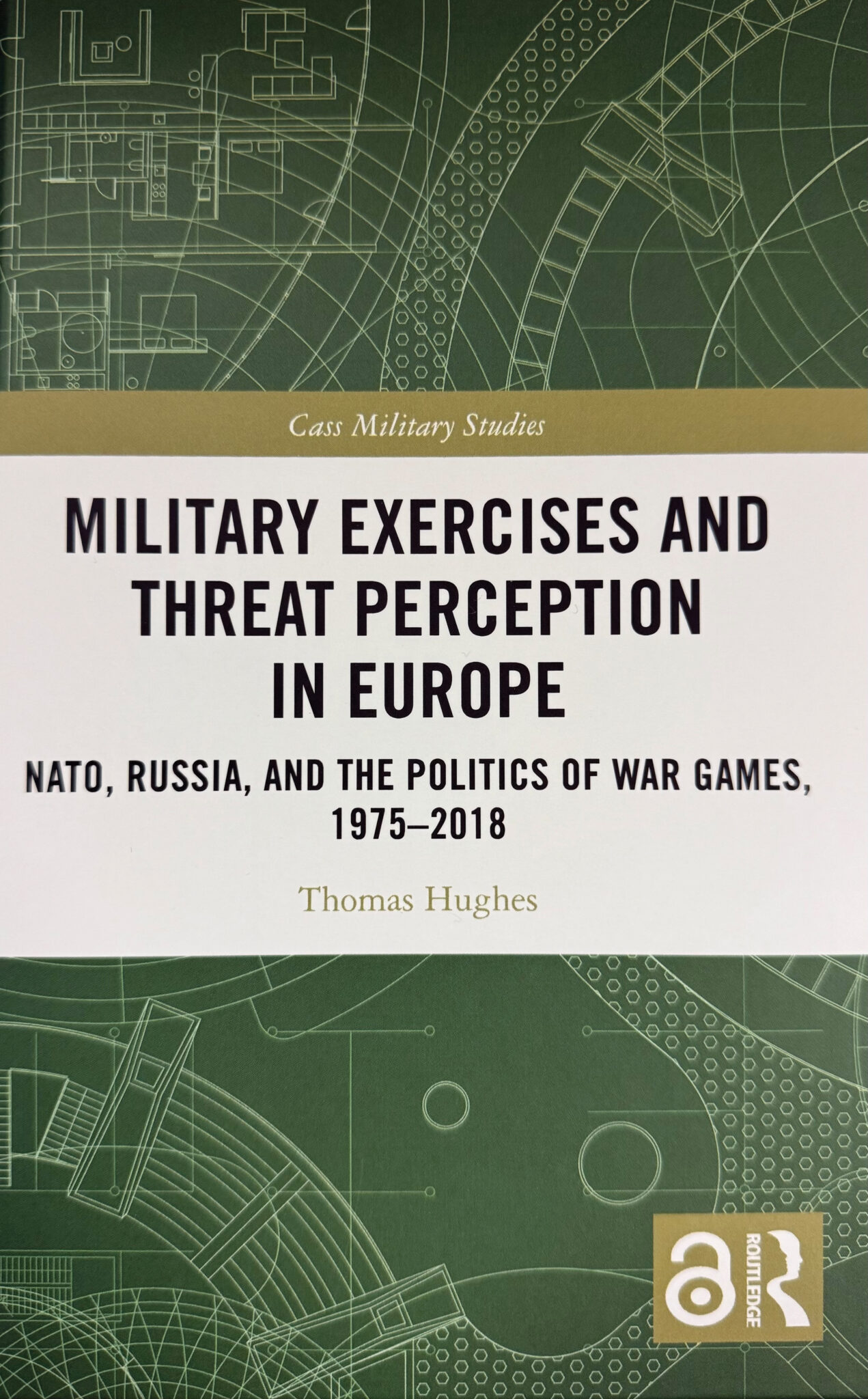
Hughes explains that NATO, specifically in the European context, uses its military exercises as an attempt “to use transparency to reduce the possibility of conflict” rather than a simple show of strength. Conversely, the book analyzes how the Soviet Union and Russia today utilized deviations from the agreements on military exercises and deception as their own strategy.
Hughes’ book describes what types of military exercises individual states find threatening. It explains how NATO typically views military exercises with minimal alarm, even during deception, but friction arises when opposing powers fail to adhere to the rules put in place. On the other hand, the book goes on to note that Russia was concerned about NATO’s unity, and exercises involving a large number of states were most concerning to Russia. This is rooted in what Hughes calls the book’s most important takeaway: “that we cannot assume that what we think we’re showing other people is what they think they’re seeing.”
Hughes explained that the inspiration for this project originated from a news story in 2015. Hughes said the story involved “The US and its allies, particularly South Korea, [who] were increasingly concerned about North Korean activity. And so the US essentially sailed close to North Korea.” This event intrigued him into how states communicate through geopolitical signals, and “what sorts of shows of force worked, what conditions worked.” Ultimately, after Hughes discussed with his supervisor, “writing down a list of every type of show of force that I could possibly think of,” and out of all the examples, Hughes said the “one that struck [him] kind of within this great big mass of types of shows of force, was exercises,” which is the focus of the book.
This book represents a long-term endeavour, with its process taking on many forms and the research taking Hughes around the world. Hughes said a broader message for students being that, “following the path that you find interesting leads you into opportunities that you’re going to enjoy more often than not.”
The book itself had been in the works for many years. Hughes said that the “book came out of [his] PhD dissertation,” writing and formatting the book on and off post-doc. It was only in the last few years that the writing process sped up with further contact with publishers and the peer review process.
If you are interested in reading Hughes’ book, it is currently available for purchase through the Routledge publishing website, along with multiple chapters available for open access on the website. Mt.A’s library also has multiple copies available to read for interested students and faculty.