“Well, who would expect it for heaven’s sakes?” asked the Canadian poet after learning the news
“You can write on a wall with a fish heart, it’s because of the phosphorous,” wrote Anne Carson in her 1992 Short Talks.
The Canadian classicist, essayist, and poet known for her funny, unexpected use of words has been recognized with the 2026 Nobel Prize in Literature. The Swedish Academy in Stockholm, Sweden, is responsible for choosing laureates and has awarded 119 literature prizes since 1901. Carson was chosen “for her bold and inventive oeuvre that, in playful dialogue with the classical tradition, has created new forms for contemporary literature.”
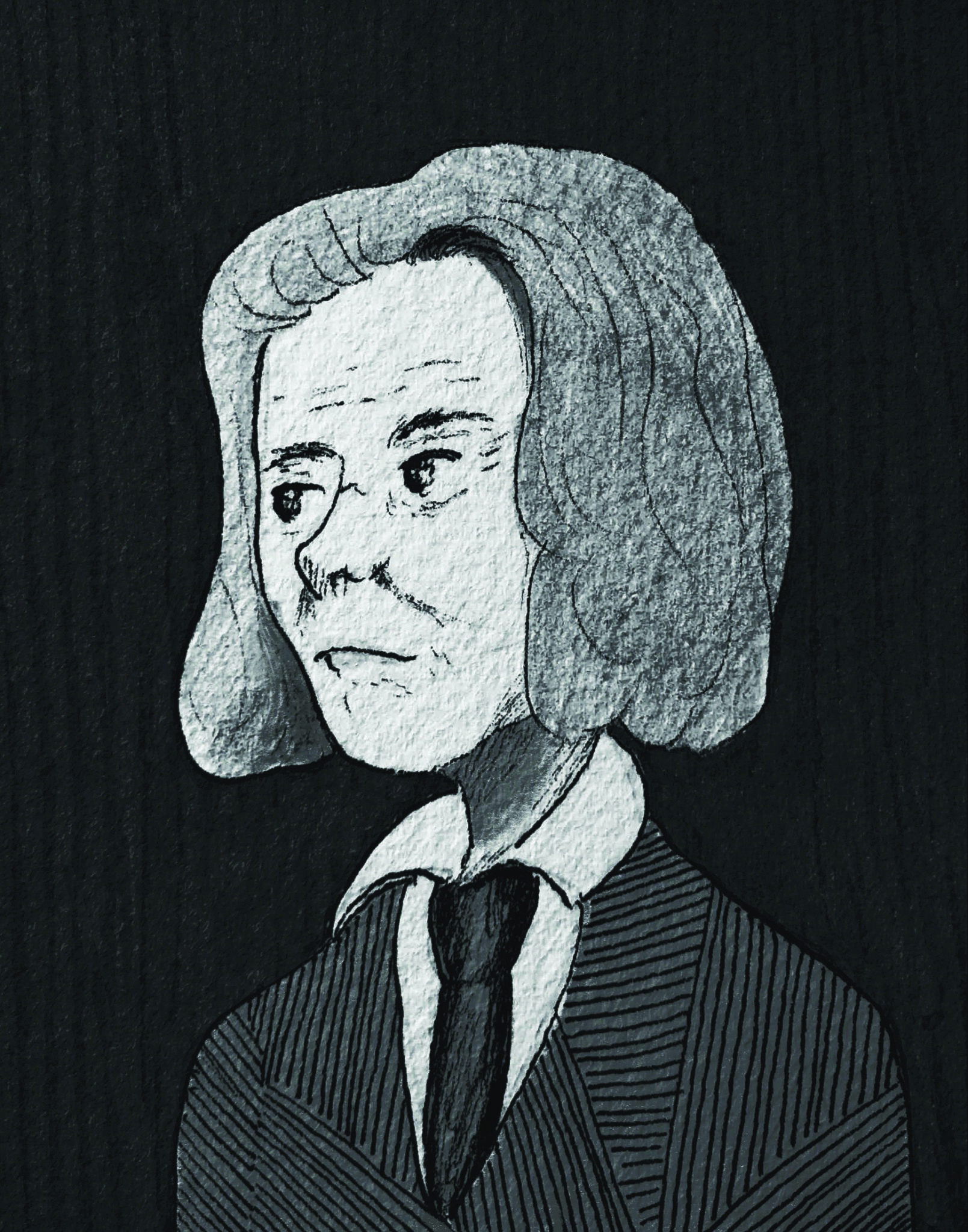
Carson, born in Toronto in 1950, studied at the University of Toronto and received her PhD in classics in 1981. She has since held teaching positions at various universities in Canada and the United States, including McGill and Princeton. Carson does Ancient Greek and Latin translations, and has written a vast array of poems, essays, and full-length collections. She also creates performance pieces like “Stacks,” which is read while collaborators move and pile cardboard boxes around her.
In a telephone interview with a Nobel Prize representative on Oct. 8, Carson was asked how she and her partner, the visual artist Robert Currie, planned to celebrate the news. From her home in Reykjavík, Iceland, she replied, “we’re going to go out and walk in the woods so that we don’t have to answer the phone, to be honest. Then we’re going to hear the choir.”
The chair of the Nobel Committee named three of Carson’s works as possible entry points for new readers. The first, “The Glass Essay,” is a long poem published in 1995. It was described by the American critic and writer Sarah Chihaya as “indisputably the greatest breakup poem ever written.” The second is Autobiography of Red: A Novel in Verse (1998), in which Carson reimagines the Ancient Greek myth where Herakles kills the monster Geryon, turning it into a love story. The third, Nox (2010), is printed onto a single piece of paper folded into an accordion of book pages that deal with remembrance, loss, and family. The Swedish Academy says “the book is as much a sculpture as a text meant to be read.”
“Carson gives the impression — on the page, at readings — of someone from another world,” wrote Sam Anderson in a 2013 New York Times Magazine profile. In a 2026 essay titled On Rosalía, the 76-year-old author described her experience at a concert by the Spanish singer-songwriter Rosalía: “The white crinolines. The shrieking. So much to understand.” In an essay published in 2025, called Beware the man whose handwriting sways like a reed in the wind, she wrote about the panic of her handwriting being “disintegrated” by Parkinson’s disease. The distress the author felt at this process led to a reflection on “how to draw a line that is not stupid.” However, despair coexists with hope: Carson’s descriptions of collapsing handwriting are accompanied by her translation of a fragment by Roman poet Catullus invoking the beginning of spring.
During a 2024 interview with the Norwegian writer Linn Ullmann, Carson spoke about taking up boxing as part of a therapy for Parkinson’s. She talked about learning to notice small details while interacting with others, citing the people in her boxing class. “You begin to see that they’re each actually pretty unique, probably crazy, and willing to be nice to you,” she said. “That kind of attention to details leads you somewhere truer than generalizing, I think.”
Carson wrote, “I am writing this to be as wrong as possible to you,” in her Short Talk about the fish heart and phosphorous. Her wrongness appears to be the most commendable of offerings.