Breaking cinema conventions with the Drama and Screen Studies Society and the famous film
A traditional unspoken expectation while watching movies is to sit back, stay quiet, and watch the screen. At Mt.A, however, that convention was broken on Oct. 29, as students gathered together for the screening of The Rocky Horror Picture Show. The screening was organized by The Drama and Screen Studies Society (DSS), in room 302 of the Purdy Crawford Centre of Arts. The doors were opened at 9:30 p.m. A supposedly normal movie night turned into an evening full of costumes, music, and audience participation.
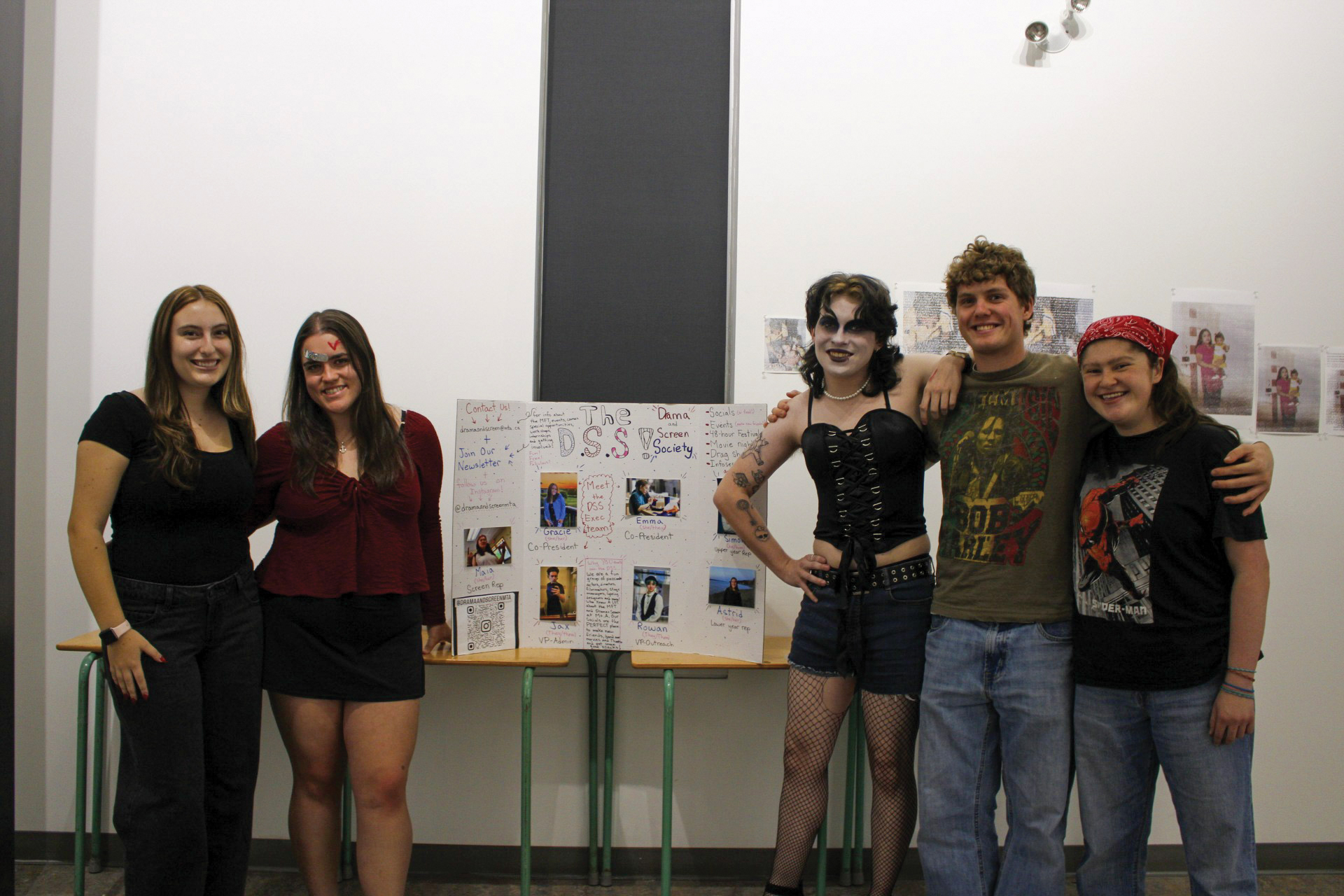
Students dressed up as characters from the movie, sang along to the songs, shouting the names of the characters, and speaking familiar lines from the film. People who had never seen the film before received a V-shaped mark painted on their faces with lipstick, indicating their Rocky Horror ‘virginity.’
This screening was not just a Halloween event for the society. It was also an opportunity to preserve a cinematic tradition within the Sackville community: “Rocky Horror viewings are a definitive cult tradition, and for me it’s also a matter of preserving viewings for the community in Sackville now that Vogue can’t offer them,” co-president of the DSS Emma Neilson said.
Neilson explained that they originally helped transition the screening into a DSS event in 2024, and the society has continued to host it since then.
Jax Bailey, vice-president of administration, of the Drama and Screen Studies Society, highlighted the significance of continuing the event as an ongoing tradition. “This is our third time putting on this event with incredible success each time,” Bailey said.
Co-president Gracie Gilbert highlighted how the film provides a chance for individuals to come together and share the experience collectively, as the audience’s active involvement is a crucial part of the screening. Traditional cinema often expects audiences to remain silent, but Rocky Horror invites viewers to engage with the film through songs, dialogue, and call-and-response moments.
Neilson explained that this symbolizes 2SLGBTQIA+ rebellion against oppressive systems and mentalities. They also pointed to the film’s use of B-movie conventions and camp aesthetics as a way of creating space for gender and genre-bending forms of expression.
The Rocky Horror Picture Show is a cult classic, because it has been associated with unconventional approaches to gender, sexuality, and performances for a long time. Released in 1975 and directed by Jim Sharman, the musical-comedy-horror film continues to challenge traditional ideas of identity and cinematic storytelling by using elements of camp, kitsch, and science fiction. In order to challenge strict societal and sexual conventions, camp in the movie uses exaggeration, gender-bending, and winking theatricality. Whereas, the film’s sympathetic, slightly gaudy pastiche of Gothic horror clichés, sci-fi serials, and mid-century B-movies is the source of its kitsch.
“The Rocky Horror Picture Show is a cult classic that celebrates queer joy and playfulness,” Bailey said. Additionally, Bailey noted the importance of the screening in remembering Tim Curry, who portrayed Dr. Frank-N-Furter in the original film. Following Curry’s passing earlier this year, Bailey said preserving his legacy was particularly meaningful to the society.
The Rocky Horror screening united students through costumes, music, and collective engagement, showcasing how cinema can reach beyond the confines of the screen. For the Drama and Screen Studies Society, maintaining the Rocky Horror tradition involves fostering a space for shared expression, queer happiness, and an alternative movie-watching experience in Sackville.
For participants, this indicated that viewing the film involved more than just tracking its plot. Singing, engaging in conversation, and dressing up enabled students to participate in the screening, crafting an experience influenced as much by the viewers as by the film.