Professor Brad Walters on the anticipated super El Niño and global impacts
El Niño is a climate pattern that the Canadian government website states “can affect weather worldwide.” The World Meteorological Organization (WMO) says, “El Niño is characterized by unusually warm ocean surface temperatures in the central and eastern Pacific.” This phenomenon happens due to easterly trade winds weakening. In an interview with The Argosy, Brad Walters, a geography and environment professor and coordinator of the environmental studies program at Mt.A, said, “The way to think of it is essentially [as] a period where the tropical Pacific Ocean burps up additional heat.”
The 2026-27 El Niño is anticipated to be a super El Niño. “It is considered by many to be one of the most severe El Niños likely to have ever occurred since we’ve been measuring these things,” Walters said.
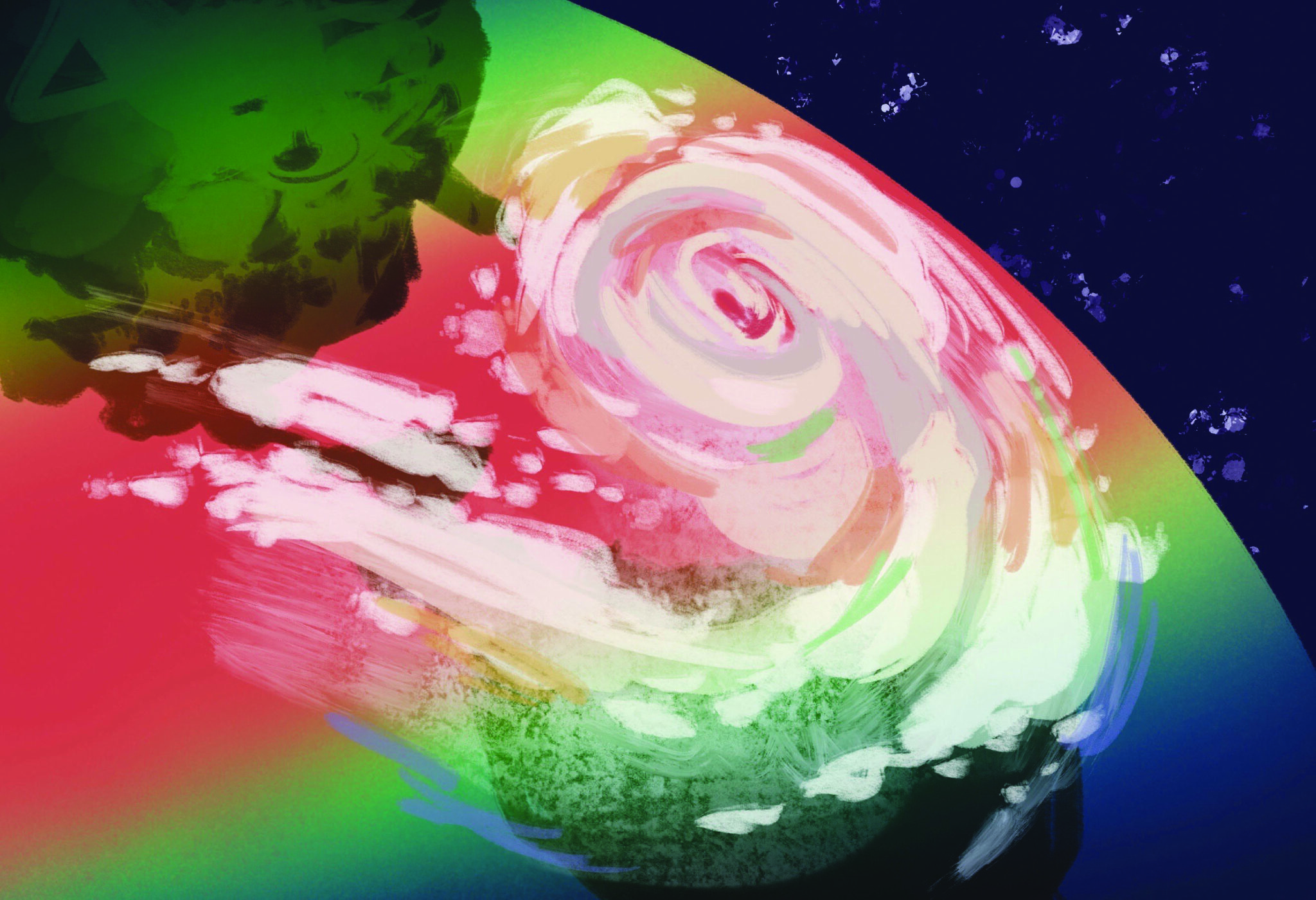
Walters said the impact of El Niño cannot be predicted with “hard and fast certainty…in a particular place at a particular time.” Estimations – done through buoys measuring factors such as temperature and salinity – become harder to calculate the further away a country is from the tropical Pacific region. However, Walters noted that, due to the estimated severity of this year’s super El Niño, there are expected to be significant changes in rainfall and drought patterns. Walters gave South Asia and Brazil as areas to expect drought and the west coast of the United States as an area anticipating heavier rainfall.
As warm waters are pushed closer, the west coast of South America – Chile, Ecuador, and Peru – is impacted by the “reduction in the upwelling of cooler, nutrient-rich waters.” Walters explained, “That [this] upwelling is responsible for some of the most productive ocean waters in terms of fisheries, seabirds, and marine mammals in the world.” The Peruvian anchoveta fishery, the largest fishery in the world, has already been shut down due to the reduction in the number of anchovies. ”You’re going to see probably massive mortality of seabirds and marine mammals along that coastline in the coming three to nine months because of the sharp reduction in productivity,” Walters said. “You are going to see global temperature records probably broken significantly again this year.”
Walters said, ”You see that [average temperature and average surface temperature] tend to spike whenever we have significant El Niño events.” This will be exacerbated by the strength of the upcoming El Niño.
Walters also focused on Canada, saying it will most likely have a milder winter. Walters noted Canadians will see “weather weirding.” This is weather out of the norm: dry conditions in some places and wetter conditions in others, although it is hard to pinpoint exactly where. However, as highlighted, there will be effects.
“There is still a lot of dispute in the scientific community about whether the recent increase in the strength of El Niños is due to climate warming,” Walters said. “It’s been happening a little more frequently, every two to three years, but generally it’s three to five [or] six years.”
Finally, Walters highlighted the recent surge in El Niño research. Walters said that until fairly recently, the scientific community was puzzled by the fact that global warming trends were not a continuous, smooth line. There would, instead, be jumps “like a saw blade.” Walters noted it was only recently figured out “El Niño is largely responsible for the staggered increase in temperature over time globally.”