Student List has taken a parliamentary majority
“Serbia is free,” students declared in a social media post after a political opposition movement secured a parliamentary majority in a recent snap election. The election – which brought out a record number of voters domestically and abroad – ousted the 12-year rule of former president Aleksander Vučić and the right-wing Serbian Progressive party.
According to independent news outlet Democracy Now! the results of the election are a product of a two-year ‘leaderless movement’ spearheaded by the “Student List-Student Win” movement, which originated on university campuses and has mobilized much of Serbia with aims of countering systemic corruption. The Student List of democratically nominated experts and professional candidates won 141 of the parliament’s 250 seats.
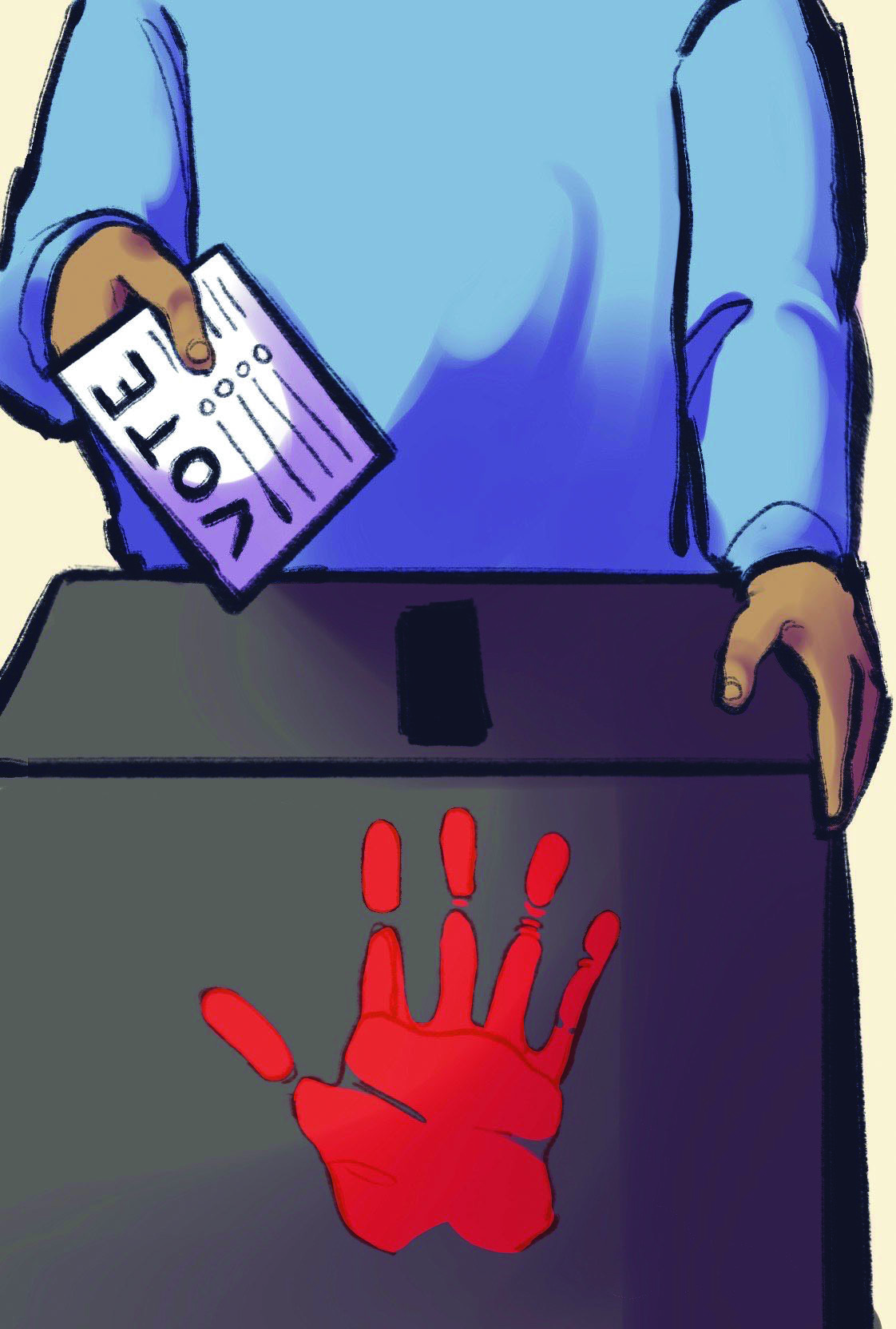
Over the course of the movement, nationwide protests have been organized by students, based on a horizontal model with no singular leader. Further solidarity from other educational and professional sectors produced robust opposition.
The Journal of Democracy outlines how mobilization came in response to the Nov. 1, 2024 collapse of a newly renovated concrete and glass canopy at a railway station in the town of Novi Sad, which killed 16 people.
According to the Business and Human Rights Centre, the tragedy precipitated widespread discussion on governmental corruption as “Critics argue that the collapse was not merely an accident.” Instead, it was argued to be “the consequence of a deeply flawed process in which public transparency was sidelined, international agreements were leveraged to bypass national regulations, and political interests were prioritized over safety.” It prompted students to organize candlelight vigils and moments of silence for the dead.
The Journal of Democracy noted how protests spread from university campuses to the rest of Belgrade and wider Serbia. The phrase “we are all under the canopy” emerged. It served as a slogan for the movement, “capturing the widely shared frustrations with systemic corruption of the government and solidarity in opposition to current institutions.” By Dec. 22. 100,000 nonviolent protesters gathered in the Belgrade city center to block bridges and roads demanding transparency and justice. Moreover, 2025 saw student road blockades and sit-ins that employed symbolic timing to align with the minute when the Novi Sad canopy collapsed.
According to the Journal of Democracy, protesters reported forceful arrests, being held without clear charges, and mistreatment in custody by police. However, protesting proved effective: it produced a “[prisoner’s] dilemma action” for the Serbian government. Responses to protests represented a “lose-lose” choice between conceding to protestors, or negative publicity for repression; both of which “eroded public legitimacy.” The protests furthered pre-existing negative publicity for the Vučić government, already under fire by the European Commission for corruption.
The Commission’s 2026 report, which came out after the Novi Sad tragedy, outlined the failures of the government in achieving most of the activities outlined in its previous Anti-Corruption Action Plan. The report further summarized the presence of attempts of undue influence impacting the investigations of the Serbia’s Prosecutors Office for Organized Crime (POOC), and concerns over strategic appointment in various levels of law enforcement in aims of political control. The commission reported the Novi Sad “[railway] investigations are yet to be completed. The POOC reported a lack of cooperation by the police regarding the full provisions of evidence collected.”
The snap election represents a major change in regional diplomacy. Serbia’s candidacy for European Union (EU) membership has been ongoing since 2012; however, according to the New Lines Institute for Strategy and Policy, “Serbia and Kosovo’s deficits in the rule of law and challenges in normalization talks have hindered the countries’ pursuits of EU membership.”
EU commissioner for enlargement, Marta Kos took to social media platform X in support of the election results, saying, “a new chapter can begin for Serbia. The door to the EU is open, and we are ready to move forward together.”
According to news outlet Balkan Insight, expression of support for the Student List from neighboring political leaders in Montenegro, Croatia, and Bosnia and Herzegovina symbolizes a step forward from the difficult relations they previously had with Vučić.
The functions of the new government will be based on the Student Plan, democratically devised by the Student List movement. The plan is organized into three sections titled Serbia or the Mafia, Knowledge is power, and Serbia Grows with Us, which will target 11 points of nationwide reforms. The lead candidate on the list is cardiologist Ilija Srdanović, who said in a public statement that the most important goal will be “creating the conditions for the rule of law, equality, freedom, media and personal freedoms, as well as respect for democratic principles.”
One Response
Inspirational to see the power of a movement and the collaborative force the inspired. Bravo students of Serbia!!!