Excitement and curiosity over how Canada will present itself at the competition
For the first time in the competition’s history, Canada is joining Eurovision – an annual song competition in which participating countries select an artist and submit a song to be performed that they feel represents the country as a whole – as an official participant! In an interview with The Argosy, part-time lecturer Jennie Del Motte, from the Mt.A music department, discussed what Canada’s role in the competition could look like.
Eurovision is an annual song competition where countries come together to participate, making it one of the biggest non-sporting competitions in the world. Each country must select an artist and submit a song to be performed that they feel represents their nation.
The inclusion of Canada in the 2027 lineup has gotten already-established Canadian fans of Eurovision very excited, but at the moment it is seemingly limited on a grander scale. “There is significant passion and commitment within Canadian fans for Eurovision; it’s just somewhat of a niche genre at this point,” Del Motte said.
Del Motte has faith that Canadians will begin to rally behind its participation in Eurovision. “We might see more developing broad cultural interest as Canada’s participation in Eurovision continues,” Del Motte said.
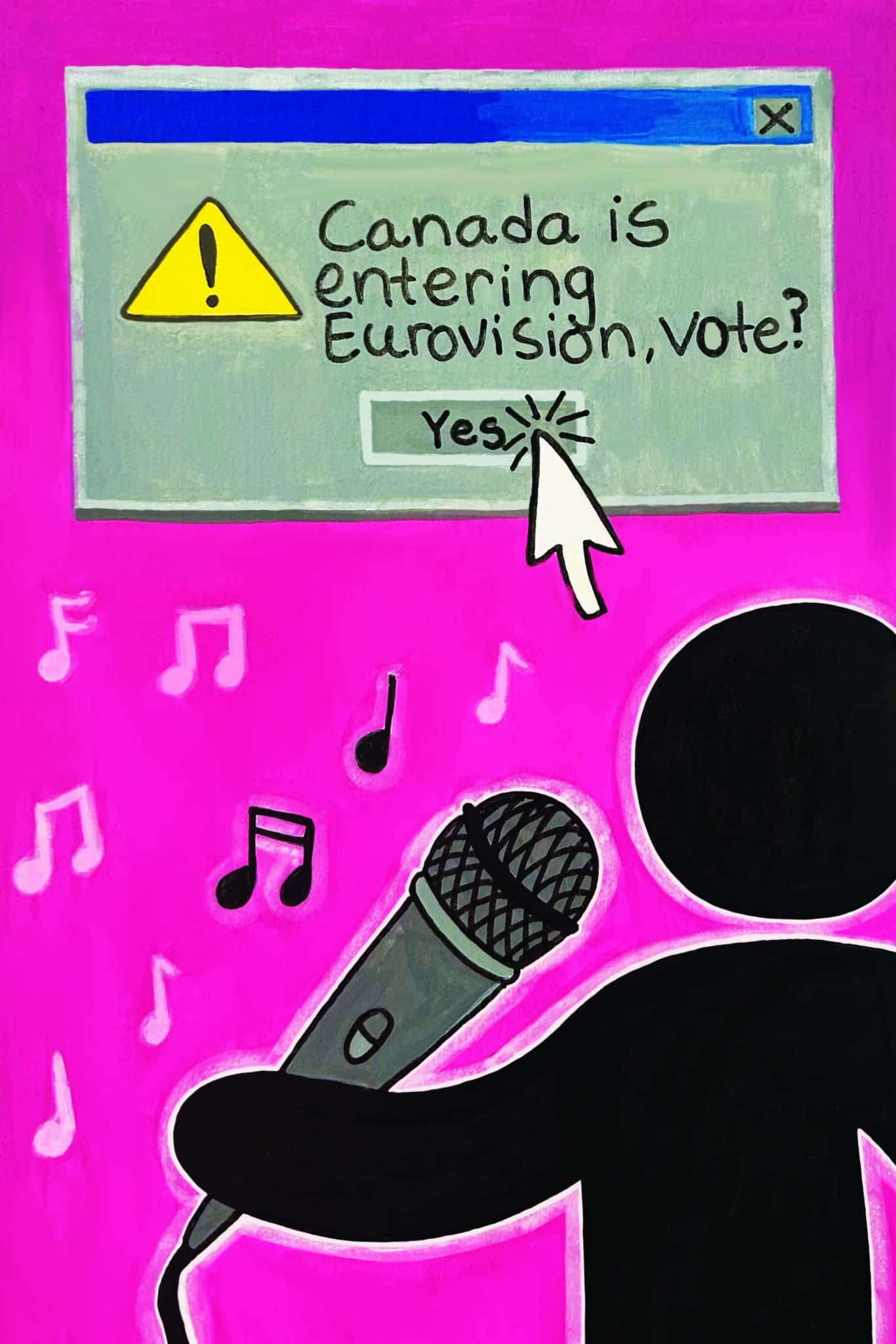
Musical identity is not only for viewership. How musical identity is presented at Eurovision is integral to a country’s success in the competition. “It’s not just about a Canadian artist who had a really good song, there is always some component of ‘this is what represents Canada within this format’,” Del Motte said.
“The judging panel [for Canada] has already tried to shape what they are going to present as the Canadian style, which is, I’d say, fluidly bilingual and intimate,” Del Motte said. This is in reference to the selected finalists, who were picked from a submissions portal through CBC.
“Having the format of the art be reflective of the linguistic landscape of our culture, at least its traditional defined landscape…Like so many things in Eurovision, it’s something traditional that gets branded as being progressive,” Del Motte said. “I think Canada is in a somewhat unique position, because that bilingualism has been taught to many of us as a foundational element of the inherent diversity of our culture.”
“I think it will be something that Canadian audiences will be proud to see…and will also make sense to Eurovision audiences as a feature rather than a gimmick, as something authentic rather than a party trick, ” Del Motte said.
Still, Del Motte has fears that Canada’s inclusion goes beyond acknowledging Canada’s close ties with Europe. In recent years, participating countries such as Ireland and Spain have boycotted the competition due to Israel’s continued involvement. This is directly related to Israel’s ongoing, large-scale military conflict in Gaza, causing mass destruction and loss of life.
“It is a strategic move,” Del Motte said. “Many of the longtime participants refused to participate last year and continue to refuse…I think it is a strategic move to bring in new blood and new audiences, because the future of the competition is somewhat precarious.”
In joining, Canada will have voting power through distributable and audience vote points. Del Motte explained that there are two semi-finals, where 20 successful performers proceed to the finale. Here, the performers secure points from countries’ juries, who have a maximum of 12 they can give, and popular votes. The performer with the highest number wins.
There are three major things a performer must do to secure the highest number of votes possible, which Del Motte labelled as “cultural authenticity, talent, and how people perceive talent, and spectacle.” Del Motte noted, “It will be interesting to see how Canada plays out within those three elements.”
As voting for who will represent Canada at Eurovision closed Nov. 5, make sure to tune in during December to see who will be performing on the stage in Bulgaria next year, and how they will interpret the Canadian musical identity!