Youth plaintiffs sue Ottawa over climate change and breach of constitutional rights
The first session of the La Rose v. His Majesty the King case trial took place on Oct. 26 in Vancouver, which, according to Latin Times, constituted “the first federal youth-led climate trial in Canadian history.” The 15 young plaintiffs are suing the Government of Canada for breaching their right to life, liberty, and personal security under Section 7 of the Canadian Charter of Rights and Freedoms.
The case reaching the courtroom has been a process seven years in the making. Judges dismissed the original 2019 complaint, which included claims of Ottawa’s breach of Section 15 equality rights in addition to Section 7 of the Charter. Federal judges argued that the complaint “raised questions beyond the reach of the courts.” However, judges reversed the dismissal after a 2023 appeal which solely cited Section 7 of the Charter in their amended case file titled “Further Amended Statement of Claim to the Defendants.” This case has reached courtrooms as judges have recognized that “the plaintiffs had identified federal legislation and Orders in Council capable of providing a legal framework for constitutional review.”
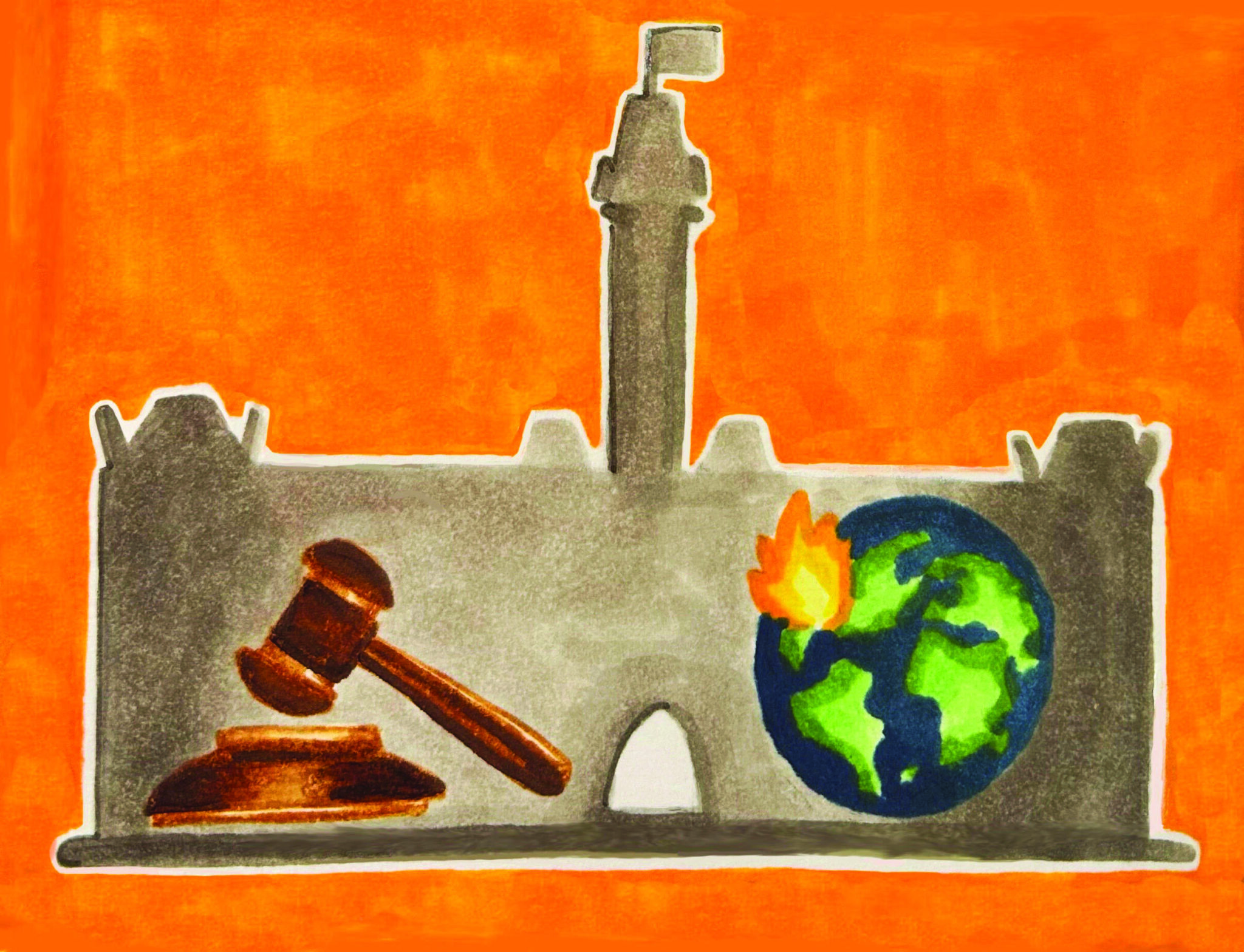
The “Further Amended Statement of Claims” uses a range of evidentiary arguments of the plaintiffs’ lived experiences and scientific data to cement a causal relationship between climate impacts influenced by government policy and constitutional breaches. The amended case file cites climate impacts as “existential,” particularly in a Canadian context it is warming at a rate faster than the global mean. One section of the Statement is the plaintiffs’ own lived experiences with the climate crisis, which includes “accounts of floods, wildfire smoke, glacial retreat, and food insecurity,” according to the Latin Times.
On top of personal accounts, the amended case file expands on science-backed concerns for Canada’s future regarding the government’s “failure” on a climate front. This expansion is seconded by the Canadian Climate Institutes analysis, which finds “Canada is now more than 20 years behind reaching its 2030 emissions target.” In an interview with CBC, Saskatchewan plaintiff Lauren Wright stated, “There’s a real lack of accountability there, which is what we are trying to address,” in regard to Canada’s pledge to the 2015 climate-change pact, the Paris Agreement.
“The question for the Court is not what Canada’s climate policy should look like, but whether the government’s conduct is consistent with the Constitution,” Catherine Boies Parker who is counsel for the plaintiffs at Arvay Finlay LLP. K.S. said, according to The Globe and Mail. According to CBC, the plaintiffs’ lawyer Chris Tollefson, in a 2020 statement, argued, “These plaintiffs are not asking for special treatment, they’re not asking protection for their individual private rights. What they’re seeking to invoke here are rights that belong to all Canadians.”
Tollefson distilled the content of these rights, saying, “The federal government has an obligation to protect the oceans, coasts, atmosphere and permafrost.” The plaintiffs claim the government is “continuing a trajectory of greenhouse gas (GHG) emissions that is inconsistent with what the best available science says is required to restore and maintain a climate system that is capable of sustaining human life, liberties and security of the person.”
Accordingly, the plaintiffs’ court order in the case of a win outlines the defendants’ constitutional obligation to correct Canada’s “GHG-emission trajectory,” by reducing them under the guidelines of “the best available science.” The case requests a set of court orders to the government, one of which being the establishment of a “climate recovery plan grounded in peer-reviewed science.” The case stipulates an accountability system whereby “the plaintiffs may seek review before [the] court if the defendants do not comply with the obligation … within a reasonable period of time.