COP31 and Canadian electrification does not transition away from fossil fuels
The 31st annual Conference of the Parties (COP31) has concluded its two-week climate convention in Antalya, Türkiye, with over 100,000 participants from 194 countries. This year, the conference has been branded an “implementation COP.” The United Nations Framework Convention on Climate Change states, “COP31 is all about implementation of climate solutions and progressing a global energy transition.”
A core discussion at the conference has been the COP president, Murat Kurum’s electrification target, which is seeking voluntary pledges to expand global electrification from 21 per cent to 35 per cent by 2035. The COP31 electrification goal means that by 2035, 35 per cent of end-use power will be electric. When end-use power is electric, it means that a wider variety of energy sources can be used to power something, rather than confined to the likes of fossil fuels. For example, this means that rather than a combustion engine directly fueled by the end source of gasoline, an electric car using a lithium battery can be powered by whatever energy source provides electricity to its plug.
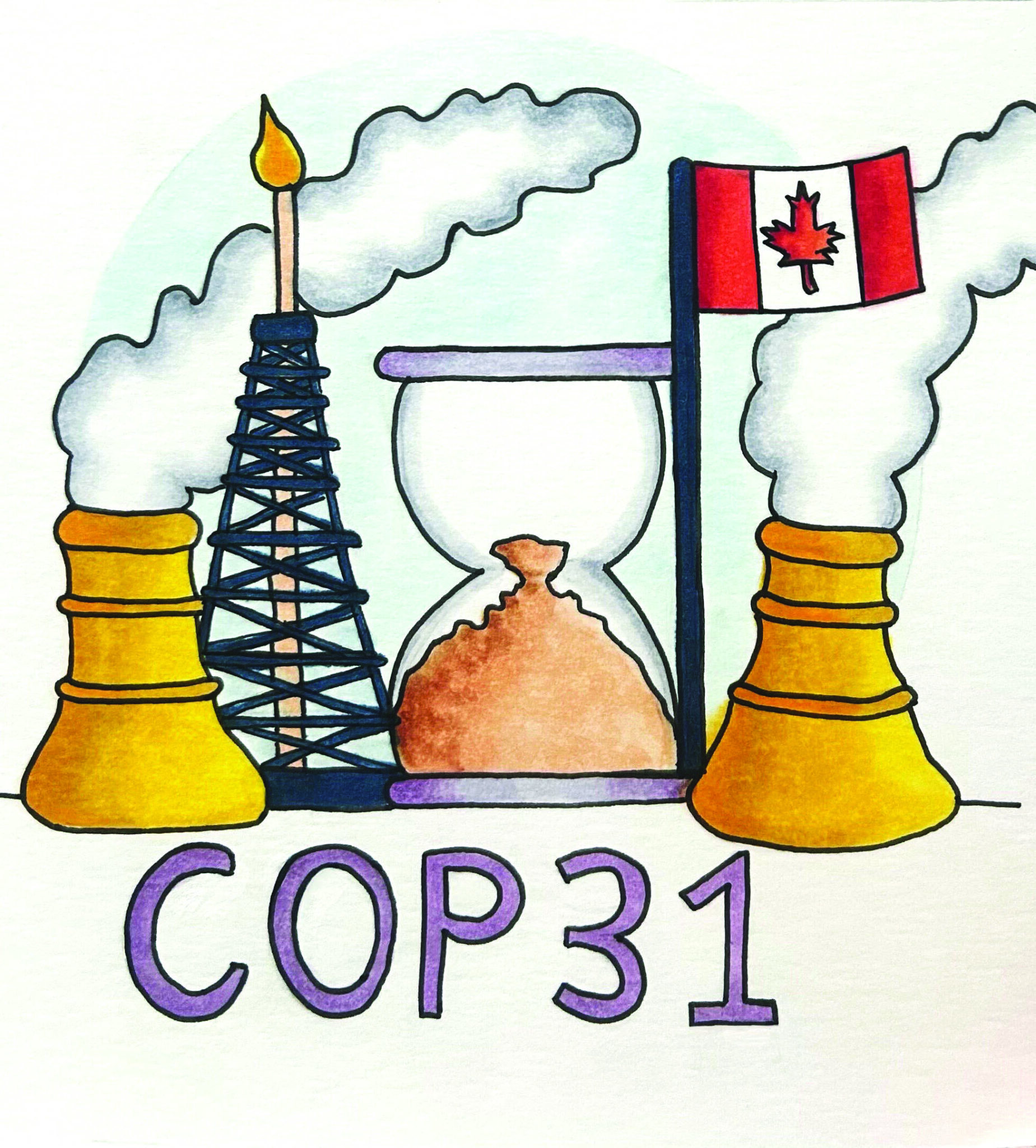
However, the electrification target does not specify “clean” energy sources. The electrification target, alongside the final Antalya Pact, has come under fire for its lack of mention of a transition away from fossil fuels as an energy source. Attendees expressed concerns as long-term climate goals of the Paris Agreement, a 2015 legally binding agreement on climate change, are already predicted to be overshot. Irene Veléz Torres, the Colombian minister of environment and sustainable development, said in an interview with The Guardian, “I’m very scared that [the target] is not going to be explicit about clean green energy, because it may imply that they are going to lock us in future dependencies on grey [gas] and coal power.” Electrification opens up an increased capacity to use renewable energy sources, but according to the Guardian, the European Union’s call for “clean” electrification was not mirrored in the Turkish proposal.
At the conference, Canada was applauded for its climate finance pledges and presentation on Canada’s “leading role in grid modernization and electrification,” at its Pavillion. However, CTV News has reported discussions on a “credibility problem” as Canadian Prime Minister Mark Carney continues to expand the fossil fuel sector back home.
Carney’s electrification stance aligns with the COP31 president’s Global Electrification Pledge, which, alongside the COP31 summit as a whole, “fails” to agree upon a transition away from fossil fuels according to BBC. “The path to net-zero is electrification,” said the Prime Minister who did not appear at COP31, announcing the government’s electricity strategy in May. The National Strategy, titled Powering Canada Strong, seeks to double Canada’s electricity grid to “accelerate electrification” by 2050. However, according to Natural Resources Canada, the strategy, which states that grid interconnectedness will “accelerate emissions reductions by allowing for more clean energy deployment,” stipulates a continued expansion and reliance on natural gas, a fossil fuel.
Canada’s reported credibility problem has been driven by domestic investment in oil and gas. Carney’s Sept. 14-15 Toronto investment summit, according to the Government of Canada, brought together international, Canadian, and public sector investors to “accelerate investments into Canada.” Carney’s summit “deal book…included $100 billion in new oil and gas proposals,” according to Charge News Canada. Additionally, the Canadian Association of Petroleum Producers reports a current $151 billion of planned oil and gas developments. Pratishtha Singh, international diplomacy manager at Climate Action Network Canada, criticised Canada’s climate policies at COP31, according to CTV News. Singh said, “Canada cannot position itself as a climate leader internationally while…doubling down on fossil fuel infrastructure.”
Canada’s credibility problem has not been the only one pointed out. According to the Guardian, Mohamed Adow, founder and director of Power Shift Africa asserted, “Europe’s hypocrisy is staggering. Its governments demand fossil fuel roadmaps from others while expanding fossil fuels themselves.” According to the Inter Press service news agency, COP31 negotiations collapsed, the first breakdown since 2009. Nations such as “the European Union, the United Kingdom, Panama and other countries rejected the proposed Antalya pact,” which is COP31’s key final consensus, over the omission of fossil fuels. While Canada also rejected the pact, Caroline Brouillette, executive director of Climate Action Network Canada, said that Canada “brings back home the shame of its national backsliding exposed to the international community.”
The “implementation COP” was silently protested by activists holding a massive sign spelling “FAILURE” outside the Plenary Hall on its final day, Nov. 20.