Does the title “girlboss” really celebrate you?
Many terms have become so popular on social media platforms like TikTok that we almost stop hearing what they actually mean. Girl dinner, girl math, I’m just a girl, high maintenance, and girlboss are all examples. On the surface, these phrases seem playful and harmless, perhaps even empowering. But do they actually celebrate women, or do they reduce femininity to something simplified, performative, and even childish?
Each phrase packages femininity into a set of jokes about what it means to be a woman. In doing so, online feminism can become less about expanding what women are allowed to be and more about setting new restrictions on womanhood to make it more algorithm-friendly. Universal behaviours are reframed as sex-specific: making questionable financial decisions (girl math), assembling a low-effort meal (girl dinner), or spending money on one’s appearance (high maintenance). Instead of poking fun at ordinary human behaviour, these labels can suggest that such habits are uniquely female.
Girl math describes the mental gymnastics people use to justify their spending. In a 2023 TikTok, creator @samjamessssss joked that “anything under $5 feels like it’s pretty much free.” Other examples include treating money from returned purchases as though it’s new money to spend. The reasoning is deliberately ridiculous, and its framing as specifically girl math begs the question: is the joke that people make financially illogical decisions, or that women do? This trend not only mocks stereotypes about women being bad at math and managing money, but it can also reinforce those stereotypes by repeatedly making poor budgeting a girl thing.
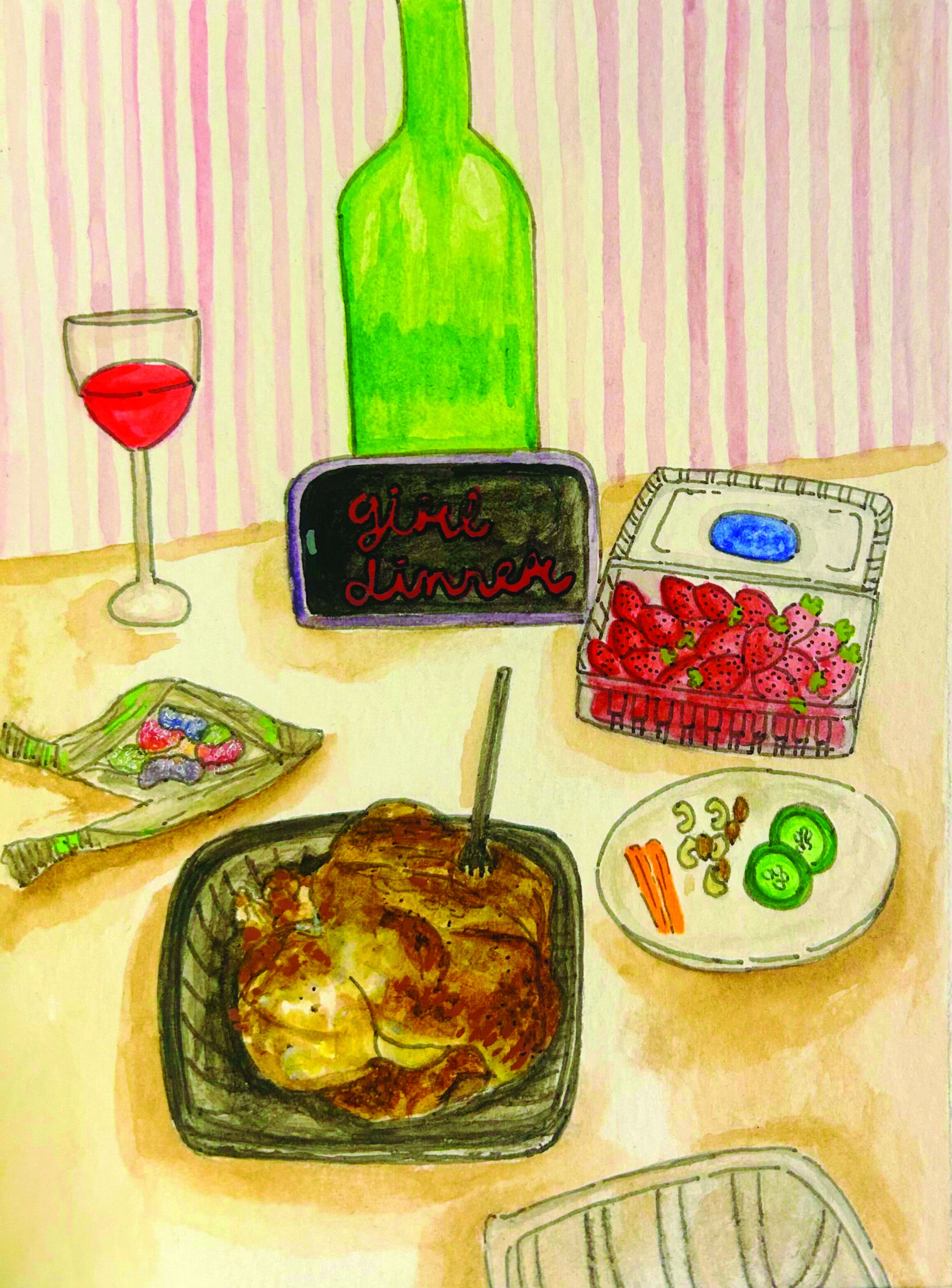
Girl dinner refers to a meal made up of assorted snacks and leftovers rather than a conventional cooked dinner. I’m sure that most of us have been too busy or too lazy to cook and settled for a slice of bread, some crackers, and an orange found at the back of the fridge. There are concerns about how some versions of girl dinner portray eating. “My biggest concern with this is that many of these ‘girl dinners’ that we see on social media are not enough food, which can both promote and normalize disordered eating and under-eating,” nutritionist Alissa Rumsey said in a 2023 article for National Geographic. A low-effort snack plate is not inherently unhealthy, but repeatedly presenting tiny portions as an appealing feminine lifestyle is worth questioning. However, Rumsey also noted that girl dinners can give women the freedom to eat what they want and take a break from the expectation to care for others and prepare traditional meals.
Women have historically been expected to cook for their families, and a woman who doesn’t prepare a proper meal can be judged differently than a man who doesn’t. Perhaps the joke isn’t just about what women eat, but about the expectation that women should be cooking in the first place.
The phrase I’m just a girl became popular on TikTok through videos set to No Doubt’s 1995 song “Just a Girl.” Some users argue that phrases like this mock expressions such as “boys will be boys.” However, that irony can get lost when the phrases are used sincerely. Instead of challenging misogynistic language, they can end up reproducing it. In February 2024, TikToker @yolundahura posted a video of a car crashed into a garage with the caption “I’m just a girl.” The excuse is funny because it’s absurd, but the joke also relies on the idea that women are incapable of doing certain things. That’s an uncomfortable implication when women’s intelligence and competence have historically been questioned. The original song criticized the restrictions placed on women, with the line “I’m just a girl / that’s all that you’ll let me be,” so it’s ironic that a phrase about being underestimated can also become a way to joke about being incompetent.
The term girlboss was popularized in the 2010s to celebrate ambitious, successful women, particularly in workplaces where leadership had traditionally been dominated by men. Yet it has also attracted criticism for suggesting that women can overcome inequality simply by working harder, being more confident, and climbing the corporate ladder. Women still face structural barriers to professional advancement, including discrimination and unequal expectations. Celebrating individual success does not remove those barriers. The idealized girlboss can also become another expectation that women must be ambitious, polished, confident, successful, and have a wardrobe full of trendy business-chic outfits. What was intended as encouragement can leave little room for women who have different ideas of success or want different careers.
High maintenance is a phrase used to describe someone perceived as demanding, expensive, or requiring considerable effort to please. On social media, it often comes up in discussions of dating expectations, beauty routines, and the time or money someone spends on their appearance. This also echoes the long-standing “dumb blonde” trope of a woman defined by her appearance rather than her intelligence or substance. The phrase high maintenance isn’t inherently gendered, yet I have never heard it applied to a man. The double standard becomes clearer when similar spending habits are described differently depending on who is doing the spending. A woman with a closet full of high heels might be labelled a vain over-consumer, while a man with rows of expensive sneakers might be called a collector.
What’s notable about these trends is that women often adopt the labels themselves rather than having them assigned from the outside. And why is the word “girl” used instead of “woman,” even when referring to fully grown adults? To be clear, I’m not saying that anyone who uses these phrases is sexist, or that women should stop joking about themselves. I’m interested in the assumptions behind the jokes. When a trend meant to satirize a stereotype relies on that stereotype for its punchline, it can end up reproducing the very thing it mocks.
Women have spent generations being told how they should look, behave, and fulfil their roles. It seems strange to celebrate internet trends as feminist progress when some simply give old expectations a new name. If calling yourself a girlboss or joking that you’re “just a girl” makes life a little more fun, that’s one thing, and I’m not asking anyone to stop. I’m asking whether these trends give women more freedom to define themselves, or just make familiar stereotypes more appealing to a younger audience.